FMB InsiderThe Public Record

People Who Shaped the Island

The people behind Fort Myers Beach

Homesteaders, developers, shrimpers, and preservationists who turned a Calusa shell mound into a town. We include only figures whose connection to the island is documented in public records or published history — each with sources.

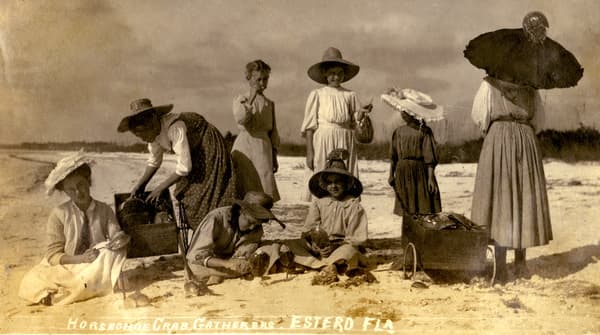
Estero Island shoreline, today's Fort Myers Beach, photographed in the early 1900s
The Estero Island shore — today's Fort Myers Beach — in the early 1900s. State Archives of Florida, Florida Memory.

Pre-contact

The Calusa

The island's first builders

For over 2,000 years the Calusa lived on and shaped Estero Island, engineering the shell mounds that still define its highest ground. They were among the most powerful societies in pre-Columbian Florida and resisted Spanish colonization longer than almost anyone on the peninsula. The Mound House preserves their legacy directly.

1895

Robert Gilbert

First homesteader of the mound

Gilbert received the 1895 homestead grant covering the Calusa mound at Connecticut Street — the parcel that would become the Mound House and, in a sense, the deeded beginning of modern Fort Myers Beach.

1911

William Case

Father of island tourism

Living on the old Gilbert homestead by 1911, Case started the island's first subdivision and its first cottage-rental business — the origin of Fort Myers Beach as a place people come to stay, not just fish. Nearly every rental on the island today descends from the idea he started.

1920s

Thomas “Tom” Phillips

Developer of the land-boom era

A wealthy Maryland inventor, Phillips built the island's first toll bridge in 1921 and launched the ambitious San Carlos on the Gulf development — never fully finished, but the spark of the 1920s boom. In July 1921 he and Chicagoan Harry Fiedlerdug the island's first canal at First and Crescent streets, beginning the canal geography that defines much of the island's waterfront today.

1921

Friend Case

Early pioneer builder

Case built a landmark island home in 1921 and lived there until 1925 — one of the surviving names from the true pioneer era, when a handful of families held the whole island.

1940s–50s

The shrimping families

Builders of the working waterfront

The families who worked the “pink gold” shrimp beds built not just an industry but the civic fabric around it — the churches, clubs, newspaper, and the Shrimp Festival still held today. They turned a seasonal fishing spot into a year-round community.

1995

The 1995 incorporation advocates

Founders of the Town

The residents who campaigned to incorporate Fort Myers Beach on December 31, 1995 — in order to control high-rise development and preserve the island's low-rise character — are the reason it's a self-governing town at all, and the reason the Mound House was saved rather than demolished.
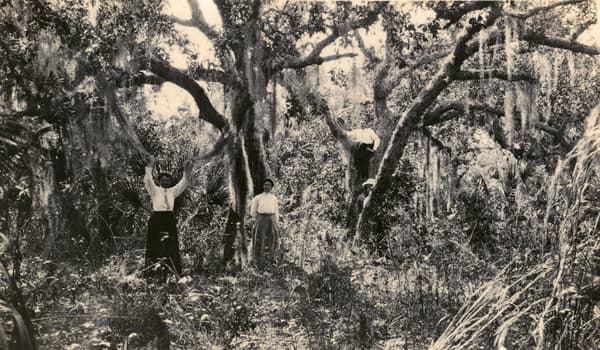
Early settlers among the live oaks on Estero Island, today's Fort Myers Beach, early 1900s
Among the live oaks on Estero Island in the early 1900s, before the land boom reshaped the shoreline. State Archives of Florida, Florida Memory.

Why some names aren't here. This page covers people whose role on Fort Myers Beach is a matter of public record or published history. We do notpublish private individuals' home locations, unverified rumors about who owns what, or a “celebrity address” map. If you can document — with a public source — someone who genuinely shaped the island and belongs here, tell us.

Sources